Pakistan Urges UN to Uphold International Law, Pushes for Security Council Reform
Pakistan has renewed its appeal at the United Nations for strengthening the authority of international law and overhauling the Security Council, cautioning that selective adherence to treaties and the rise of parallel diplomatic frameworks could undermine the UN amid escalating global tensions.
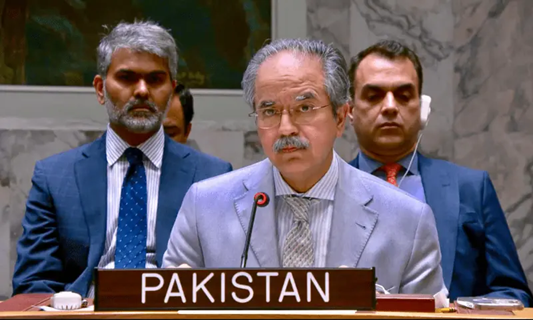
Addressing the International Law Year in Review 2026 Conference on Thursday, Pakistan’s Permanent Representative to the UN, Ambassador Asim Iftikhar Ahmad, warned that inconsistent application of international legal obligations was eroding the post–World War II system of collective security.
He stressed that international law could not survive if states chose when and how to comply with it, calling for firm rejection of legal double standards. The principles enshrined in the UN Charter, he said, must be implemented with consistency and resolve to preserve the rules-based global order.
Linking the state of international law to the effectiveness of the Security Council, Ambassador Asim noted that deep divisions among major powers had increasingly stalled the body’s ability to act. He highlighted the unanimous adoption of Security Council Resolution 2788 during Pakistan’s presidency in July last year as proof that consensus remained possible despite geopolitical rivalries. The resolution, he added, reinforced the importance of resolving disputes through peaceful means.
The ambassador also cautioned that disregard for binding international agreements posed a serious threat to the UN system. Referring to India’s unilateral decision to place the Indus Waters Treaty in abeyance, he described such actions as a worrying pattern that weakened trust in international law and risked destabilising the region.
On Security Council reform, Pakistan reiterated its long-standing opposition to proposals that would expand permanent membership or preserve veto privileges. Any meaningful reform, he said, should avoid deepening existing structural flaws and instead strengthen the role and influence of elected members who reflect the broader UN membership.
Ambassador Asim further underscored the growing challenges posed by emerging technologies, urging the UN to take a leading role in developing legal frameworks for artificial intelligence, cyber activities and autonomous weapons systems.
Commending the contributions of the International Court of Justice and the International Law Commission, he called for proactive development of international law to ensure new arenas of conflict do not remain outside legal regulation.
Despite ongoing criticism of the UN’s effectiveness, he maintained that the organisation continued to enjoy widespread legitimacy. He said most member states still believed strongly in multilateralism, arguing that reform and renewal — not sidelining the UN — offered the best path forward.
Similar concerns have surfaced in diplomatic exchanges at the UN this week, with several delegations privately warning against the growing use of informal mechanisms operating outside established UN structures, even when presented as supportive initiatives.
Earlier on Thursday, Pakistan joined 19 other countries in endorsing the charter of a proposed “Board of Peace”, an initiative backed by US President Donald Trump. While the United States has said the body would function alongside the UN, diplomats cautioned that it could potentially complicate the organisation’s central role in maintaining global peace.
As conflicts in Gaza, Ukraine and other regions continue to strain the multilateral system, diplomats say the key challenge remains ensuring that new initiatives reinforce — rather than weaken — the UN’s authority at a critical moment for global governance.